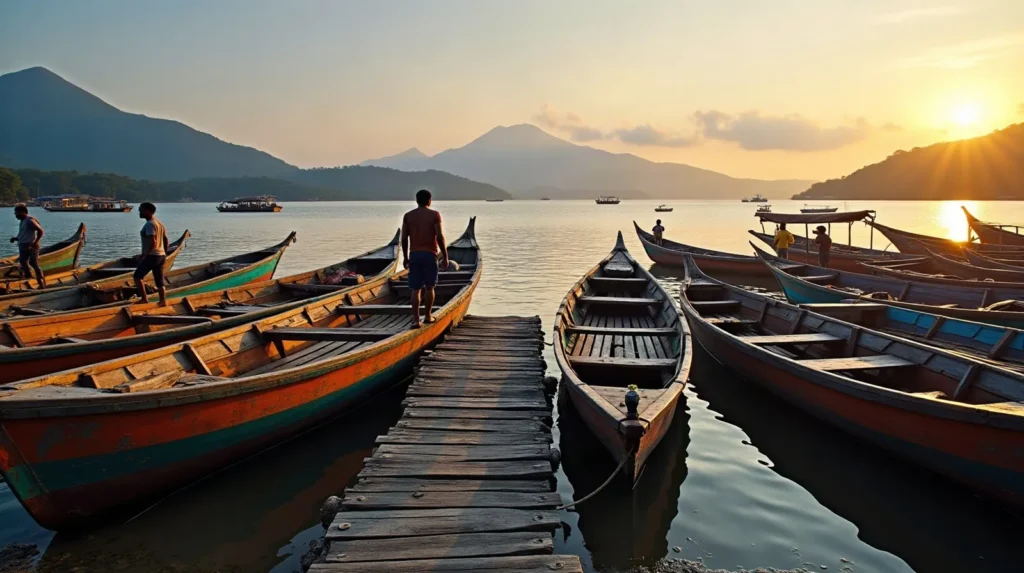
Boats are built on Lombok in three main working areas: Awang on the south-east coast, Tanjung Luar — the island’s largest fish-landing harbour — on the east coast, and Labuhan Lombok facing the Alas Strait, with FRP workshops concentrated around the west-coast corridor. The desk does not own these yards and does not pretend to: it matches each project to the yard whose material skills, slipway limits and current workload fit, then supervises the build under a written contract.
The Yard Map, Honestly Drawn
There is no single “Lombok shipyard” in the industrial sense. What the island has is better for small and mid-size working craft: clusters of experienced builders around its working harbours, each with a lineage in particular hull types and materials. Knowing which cluster suits which project — and which shed has capacity this season — is a large part of what the commissioning process gets right or wrong on day one.
Awang
Fishing-hull lineage
Awang, on the shore of Awang Bay in south-east Lombok, sits in a fishing region whose builders have produced timber working hulls for generations. The local style — long, seakindly hulls with generous sheer, built by inherited scantling rules — is the backbone of the desk’s working fishing-boat programme and suits owners who want traditional timber construction with modern fastenings and documented materials.
Slipway and access
Launching here is beach and ramp work governed by tide, suited to small and mid-size hulls. Larger or deeper-draft projects are steered to harbours with more water rather than forced into an optimistic launch plan.
Tanjung Luar
Working-harbour skills
Tanjung Luar in east Lombok is the island’s busiest fish-landing port, and its boatbuilding follows the fleet: hulls built to go to sea daily, repaired fast, and kept earning. For working boats that must be maintainable with local skills for their whole life, this lineage is a genuine asset. The harbour’s repair activity also means hauling, engine and hardware trades are close at hand during a build.
Labuhan Lombok
East-coast access to the Alas Strait
Labuhan Lombok, the east-coast ferry harbour, faces Sumbawa across the Alas Strait. Its sheltered bay and position make it a practical station for builds that will work eastward routes, and a natural first leg for delivery passages heading toward Sumbawa and onward to Komodo waters. The desk uses it where east-coast logistics or the boat’s future operating area argue for it.
West-Coast and FRP Workshops
Fibreglass work concentrates where the tourism economy is: the west-coast corridor serving the Bangsal–Gili traffic and the Mataram area. This is where FRP day boats and fast-boat hulls are laminated and where moulds, resin supply and glass stock are easiest to manage. For an FRP build, controlled workshop conditions matter more than a romantic waterfront shed — lamination quality is a process discipline, which is why FRP projects get their own inspection regime through the stage-inspection programme.
How the Desk Selects a Yard
Match by material and size
Timber projects go to timber builders with the right lineage; FRP projects go to workshops with proven lamination control; and every project is checked against the practical slipway and launch limits of the harbour before contract, not after. When a commission outgrows what Lombok’s ways can launch, the desk says so plainly and routes the build to specialist partner facilities rather than bending the truth.
Capacity and current load
A good yard with three hulls already on the floor is the wrong yard this season. The desk checks real current workload and lead times before recommending, because schedule honesty at contract time is less expensive than delay claims later.
The track-record file
For each build, the desk assembles a track-record file on the selected yard: boats delivered, references, and the workmanship evidence gathered through supervision on previous projects. Owners see why a yard was chosen, and every yard’s work on the current project is then verified gate by gate through independent inspection — never taken on trust.
Visiting Before You Commit
Owners are encouraged to walk the yards before contracting. The desk arranges accompanied visits with a practical checklist — structure of hulls in progress, timber storage, resin handling, fastenings, tidiness of the ways — so the visit produces judgement rather than photographs. Yard selection then locks into the written contract and milestone plan described on the contract and supervision page, with pricing framed against the current USD bands.
Materials and Trades Around the Harbours
A yard is only as strong as the trades and supply lines around it. Around Awang and Tanjung Luar, that means documented hardwood supply through SVLK channels, sawyers who understand boat timber rather than furniture stock, and caulkers and fastening hands who have done the work for years. Around the west-coast workshops it means resin and glass supply with honest shelf-life handling, and access to Mataram for hardware, electrics and engine parts. Labuhan Lombok adds the east-coast logistics of the ferry link to Sumbawa. The desk weighs this supporting ecosystem when matching a project to a harbour, because a shed with great hands but a broken supply chain still delivers late.
Frequently Asked Questions
Which is the best boat yard in Lombok?
The honest answer is best-for-the-project: a timber working hull belongs with the Awang and Tanjung Luar lineages, an FRP fast boat with a controlled west-coast workshop, and the decision also weighs slipway limits, current workload and track record. The desk matches rather than crowns one yard — and shows the owner the file behind the match.
Can I visit yards before contracting?
Yes — accompanied yard visits are part of the selection stage, run with a practical checklist: hulls in progress, timber storage, resin handling, fastenings, the state of the ways. The visit is designed to produce judgement, and what you saw is then verified continuously through the stage-inspection programme once the build starts.
What size boat can Lombok slipways launch?
Practical limits vary by harbour: beach-and-ramp launching in the south suits small and mid-size hulls, while east-coast harbours offer more water. The desk states each harbour’s real limit before contract, and when a commission exceeds what local ways can launch, it routes the build to specialist partner facilities rather than forcing an optimistic launch plan.
Do yards work with owner-supplied equipment?
Commonly, yes — engines and electronics are often owner-supplied, with fitment responsibility, warranty boundaries and delivery timing defined in the contract so a late crate does not become a schedule dispute. The desk coordinates the logistics and the paper trail either way.
Related reading: a tour of Awang, Tanjung Luar and Labuhan Lombok — what each working yard is actually good at. Lombok against Bira as a build location — an honest comparison for owners choosing a coast.