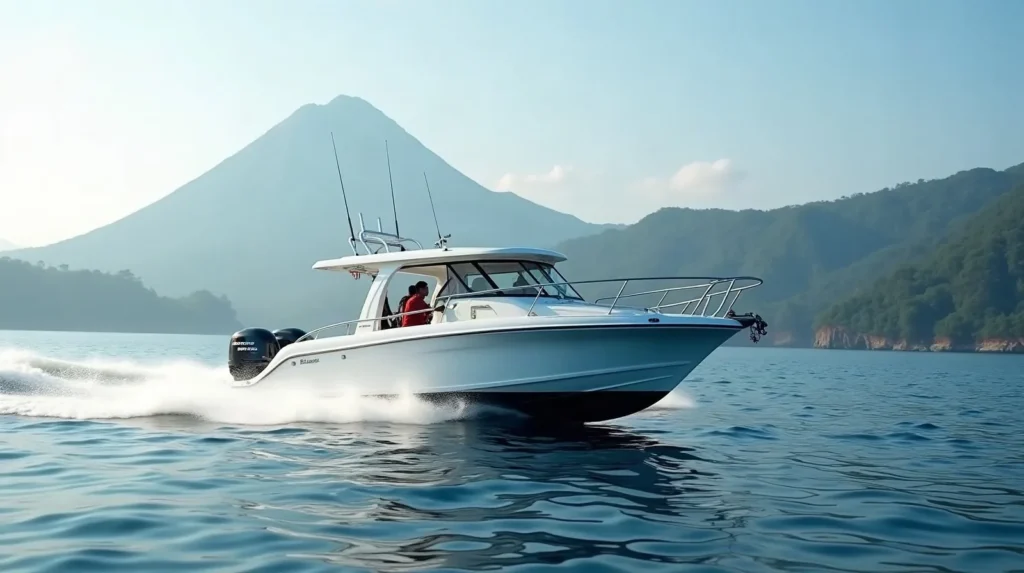
After launch, a Lombok build moves through commissioning weeks — shakedown runs and systems tuning on the owner’s actual boat — combined with crew training, a contract-defined warranty and defect process, and a written first-year maintenance plan with a practical spares list. The desk does not disappear at handover: the project ends when the boat is running reliably with a crew that knows it, not when it first touches water.
Why After-Sales Is Part of the Build
Most problems a new boat has in its first year are not construction defects — they are commissioning gaps: a pump that was never run under load, a crew that never saw the electrical panel explained, a service interval nobody wrote down. The desk treats the weeks after launch as the final stage of the build, with the same discipline as the nine stage gates that came before it.
Commissioning Weeks
Shakedown runs
The first weeks afloat follow a shakedown plan: progressively longer runs under increasing load, deliberately exercising every system — engines at service load, tankage and transfer, anchor gear, electronics, plumbing under real use. Faults surface while the yard’s people are still within reach and while the defect list from the pre-handover survey is still open, which is exactly where you want them.
Systems tuning
Propeller matching is verified against engine load readings, alarms and sensors are calibrated, charging is balanced against the real electrical draw, and steering and trim are adjusted to the boat as launched rather than the boat as drawn. For vessels heading onward to Komodo waters, the delivery passage doubles as an extended shakedown with planned stops.
Crew Sourcing and Training
Training on the actual boat
Generic training does not keep a boat reliable — familiarity with this hull, this engine room and this panel does. During commissioning the crew runs the boat under supervision: daily engine checks, fuel management, bilge and safety routines, and the fault-finding basics for the systems actually installed. Owners who need crew sourced can ask the desk to support recruitment ahead of launch so training happens before the first paying trip, which matters most on charter programmes such as a Komodo-route liveaboard.
Documentation handover
Handover includes the document pack: builder’s drawings and specification, engine and equipment manuals, wiring and plumbing schematics, certificate file, and the service log started on day one. The boat’s paperwork should outlive every crew change — that only happens if it exists in one organised file from the start.
Warranty and Defects
What the contract covers
Defect liability is defined in the construction contract issued by PT Komodo Galangan Nusantara: what is covered, for how long, and how equipment warranties from engine and electronics manufacturers pass through to the owner. The desk states this scope honestly and in writing — no invented guarantee numbers, no verbal promises that evaporate after launch.
The response process
Defect reports go through one channel with photographs and a description, get classified, and get a written response with a rectification plan. Items linked to the handover defect list stay tied to the contract retention until they clear.
The First-Year Maintenance Plan
Service intervals
Every boat leaves with a maintenance calendar written for its actual equipment: engine service hours, filter and impeller changes, anode checks, winch and steering service, and — for timber hulls — the haul-out and recaulking schedule that keeps a wooden boat honest. The first-year plan is deliberately conservative; a new boat is still proving itself.
Spares to keep aboard
The handover pack includes a practical spares list sized to the engine package and operating route: filters, impellers, belts, fuses, pump service kits and the consumables that are hard to source at short notice away from a main harbour. For boats working the Gili crossing this list is short; for vessels ranging east toward Komodo it is longer, and it is written down rather than guessed.
Ongoing Management After Handover
Some owners want a counterpart running maintenance, crew and compliance long after commissioning ends. That is a separate scope under a separate agreement — vessel-management contracts are issued by PT Komodo Vessel Management, distinct from the construction contract — and the desk hands over to it cleanly when an owner wants continuity. Whether or not management follows, the build desk remains the point of record for the boat’s construction history. To scope any of this before contract, start with a message to the desk via the contact page.
The First Hundred Engine Hours
The first hundred hours decide how the next several thousand go. During commissioning the desk has the crew log every run: hours, load, temperatures, fuel burn and anything that sounded or felt different. Oil and filter changes follow the manufacturer break-in schedule to the hour, not to memory. Small anomalies — a weeping seal, a drifting gauge, a pump that cycles too often — get reported and fixed while the boat is still near the yard and still inside the defect-liability window, instead of being normalised by a crew who assume new boats just do that. The habit of logging built in these weeks is itself a deliverable: a boat with a complete log from hour one is easier to maintain, easier to insure and easier to sell.
Frequently Asked Questions
Can the builder help source and train a crew?
Yes. Crew sourcing support ahead of launch and commissioning-week training on the owner’s actual systems are part of the after-sales scope: daily engine checks, fuel and bilge routines, and fault-finding on the equipment actually installed — not generic classroom material. On charter programmes the training runs before the first paying trip.
What warranty comes with a Lombok build?
A contract-defined defect liability period with a clear reporting channel and a written response process, plus manufacturer warranties on engines and equipment passed through to the owner. The scope is stated honestly in the construction contract — no invented guarantee numbers, and items from the handover defect list stay tied to the retention until they clear.
What spares should a new boat carry?
A practical first-year list sized to the engine package and route: filters, impellers, belts, fuses, pump kits and the consumables that are hard to source away from a main harbour. Boats working the Gili crossing carry a short list; vessels ranging toward Komodo carry more — either way it is written into the handover pack, not guessed.
Is ongoing management available after handover?
Yes, as a deliberately separate scope: vessel-management contracts are issued by PT Komodo Vessel Management, distinct from the construction contract with PT Komodo Galangan Nusantara, and the desk hands over cleanly with the boat’s full document file. Owners get continuity without ever mixing the two ledgers.
Related reading: the commissioning weeks and crew training — what happens between sea trial and first paying passenger. repower or replace an ageing Gili boat — the maths owners run before committing to a new hull.