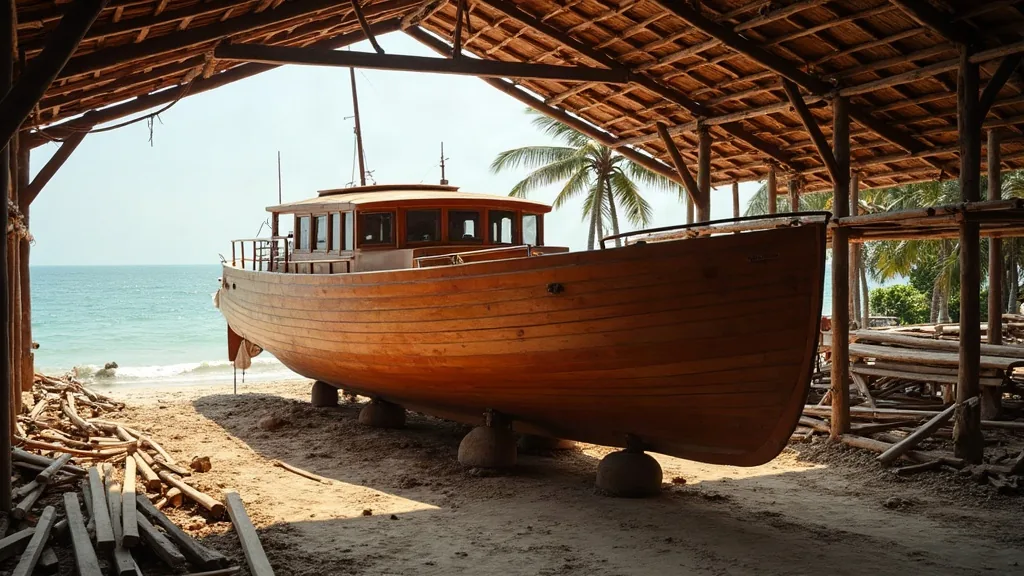
A lombok built liveaboard for Komodo and eastern routes must start from stable hull lines, adequate tankage and machinery for long-range operation, and a general arrangement that separates guest and crew flows while supporting diving, tenders and hotel services. Getting these fundamentals right at build stage is what makes the vessel commercially workable, efficient to run and acceptable to regulators.
What a Charter-Ready Komodo Liveaboard Must Deliver
For Komodo, Sumbawa and eastern Indonesia, a liveaboard must operate safely over long passages, anchor reliably in exposed bays, and support continuous guest turnover. As a liveaboard builder in Lombok, the discussion usually starts with route profile, passenger count and hotel standard, then works back into hull size, structure and systems.
Typical priorities when you build liveaboard in Lombok for these routes include:
- Safe stability with full fuel, water, guests and dive gear loaded.
- Range for 1,000–2,000 nm between main fuel bunkerings, depending on itinerary.
- Cabin layout that matches Kemenhub passenger limits and realistic crew manning.
- Machinery sizing for air-conditioning, galley, compressors, watermaker and hotel loads.
- Durable finishes and systems that can be serviced in Labuan Bajo, Lombok or Makassar.
- Compliance with Kemenhub and local Syahbandar requirements for commercial operation.
Hull Type, Size and Stability vs Cabin Count
Most clients considering kapal liveaboard buatan lombok for Komodo choose either a phinisi style build Lombok (timber hull with traditional lines) or a more modern displacement form (steel or composite). Both can be made to pass Kemenhub requirements for passenger service, but they have different implications.
| Aspect | Timber / Phinisi-Style Hull | Steel or Composite Hull |
|---|---|---|
| Typical LOA band | 28–45 m (overall) | 24–40 m (overall) |
| Cabin capacity planning | 6–12 guest cabins + 4–8 crew cabins | 6–14 guest cabins + 4–10 crew cabins |
| Initial stability characteristics | Heavier displacement, softer roll if ballast and topsides managed correctly | Can offer higher GM; needs careful superstructure weight control |
| Construction materials | ulin, bengkirai, local hardwoods, marine plywood, epoxy/GRP sheathing options | Shipbuilding steel, or composite laminates with specified scantlings |
| Maintenance access | Timber repairs in many Indonesian yards; drydock scheduling still needed | More predictable corrosion/laminate regimes; class-friendly structure |
The number of cabins is not just a marketing choice. It drives overall displacement, freeboard and required stability. When designing a lombok built liveaboard, we model loaded conditions: full tanks, full guests, full dive gear and tenders aboard. This feeds into scantlings, ballast, superstructure height and passenger rating discussions with surveyors and, where applicable, BKI.
More cabins and higher topsides mean more windage. On Komodo anchorages with strong afternoon gusts, insufficient weight low in the hull or excessive superstructure can create uncomfortable motion and anchoring behaviour. We address this at lines-plan stage rather than trying to fix it with “bolt-on” stabilisers later.
Tankage, Range and Machinery for Eastern Routes
For Komodo and eastern runs, fuel capacity and machinery selection underpin reliable schedules. Many operators use Labuan Bajo, Lombok and sometimes Kupang as bunkering and service ports. Tankage is sized from intended season length and how remote the operating area will be.
Indicative Planning Bands
These are planning bands only; final figures depend on hull resistance, engine choice and hotel loads:
- Fuel: Often planned in the 15,000–45,000 L range for 28–40 m vessels, targeting 1,000–2,000 nm endurance at economic speed.
- Fresh water: 8,000–20,000 L storage plus watermaker, sized for guests, crew, laundry and dive operations.
- Black/grey water: Sufficient holding capacity and treatment arrangements to keep discharges compliant in Komodo National Park and other sensitive areas.
Engines and Generators
Main engine selection is driven by desired service speed, parts availability in Indonesia and fuel burn. Many owners prioritise robust medium-speed engines that local mechanics know how to service, even if they are not the lightest option.
Generator sizing is one of the most common design errors in liveaboard projects. Loads to account for include:
- Full air-conditioning with worst-case ambient temperatures and humidity.
- Galley equipment (ovens, refrigeration, freezers, dishwashers).
- Dive compressors and nitrox systems, which have heavy intermittent loads.
- Lighting, entertainment and general hotel electrics.
- Watermaker high-pressure pumps.
Normally we recommend at least two main generators (for redundancy and load sharing) and often a night/harbour set. A preliminary load analysis during the early design and build-planning stages prevents under-specification that would otherwise shorten generator life and restrict hotel comfort.
Guest Areas, Dive Platform and Traffic Flow
A workable liveaboard has clear separation between guest relaxation zones, wet/dive areas and crew working spaces. This is as much a safety issue as it is a comfort issue, especially when operating tenders in swell and current.
- Cabins: Clear headroom, cross-ventilation, good sound insulation from machinery and public areas, and escape routes that meet surveyor expectations.
- Saloon and dining: Positioned for natural ventilation and shade, often combined with bar and briefing area. Must accommodate full guest complement in bad weather.
- Deck lounges: Consider shade structures, wind exposure on long crossings and structural support for any heavy features (jacuzzis, large sunbeds).
- Dive deck: Benches, tank racks, gear storage and clear gangways. Hoses, compressors and fill lines routed to reduce trip hazards.
- Dive platform: Stable, with safe steps or ladders. Handholds, lighting and tender approach patterns planned from the outset.
When you engage a liveaboard builder Lombok side, it helps to bring a sample itinerary and daily schedule. We then ensure that watchkeeping, tender fuelling, garbage management and crew movements do not cross through guest relaxation and service areas wherever possible.
Crew Accommodation and Service Spaces
Many otherwise attractive Komodo liveaboards struggle because crew are cramped, hot and pushed into leftover spaces. For a professional operation, crew are on board most of the year, and their accommodation, mess and work areas must be designed deliberately.
- Crew cabins: Sufficient berths for captain, officers, deckhands, engineers, dive guides and hotel staff, with separation of genders where needed.
- Crew mess and galley access: Areas where off-watch crew can eat and rest without occupying guest saloons.
- Laundry and stores: Laundry handling, linen storage, provision freezers and dry store rooms located for efficient resupply at Labuan Bajo or Lombok ports.
- Workshop and spares: Space for tools and critical spares, especially if the vessel will run to more remote eastern islands where support is limited.
Good crew flow means crew can move between engine room, galley, laundry and deck without cutting through guest cabin corridors more than necessary. This also assists with emergency egress and muster planning under Kemenhub rules.
Regulatory Framework and Documentation
Commercial liveaboards operating Komodo and eastern routes must satisfy Indonesian regulatory requirements. This involves design assumptions, material choices and systems layout being aligned from the outset with likely survey expectations.
Depending on vessel size and intended operating area, this may include:
- Structural and stability considerations aligned with Indonesian flag and, where chosen, class-society expectations. More detail is outlined in our guidance on class and certification pathways.
- Fire safety, escape routes, fire pump and hydrant layout, extinguishers and detection systems appropriate to passenger carriage.
- Life-saving appliances: life rafts, jackets, rescue boat/tender arrangements and muster station layout.
- Machinery and electrical installation standards suitable for survey, including cable sizing, switchboard layout and ventilation/fire integrity in engine spaces.
Early in the project, we outline a documentation path aiming toward Surat Ukur, Gross Akte and Pas Besar issuance, so owner, designer and builder are aligned on the information to be compiled for Syahbandar and surveyors.
Build Contract, Payment Milestones and Owner Supervision
A liveaboard project of this size and complexity requires a clearly-structured contract and payment plan linked to real build milestones. All new-build liveaboard construction contracts are issued by PT Komodo Galangan Nusantara, and can incorporate owner-supplied components where agreed.
We encourage owners or their representatives to remain closely involved through structured reporting, site visits and inspections. An outline of typical commercial terms, milestone definitions and how engineering changes are handled is available in our overview of contract structures and supervision options.
For owners seeking more customised features or hybrid operating profiles (dive + surf + expedition), our custom new-build approach may be more appropriate than a standardised layout.
Delivery Passage from Lombok to Labuan Bajo
Once construction, harbour trials and acceptance are complete, the vessel must be repositioned from Lombok to Labuan Bajo for initial operations. This is a straightforward but important passage that crosses active straits and variable monsoon patterns.
- Route planning: Common options depart from Bangsal, Teluk Nara, Senggigi or Lembar, then progress via northern Sumbawa anchorages toward Komodo and Labuan Bajo.
- Seasonality: Routing and departure timing consider SE and NW monsoon patterns, swell, and local current patterns through the straits.
- Shakedown: We generally recommend a series of local shakedown trips around Lombok and the Gili islands before attempting the full repositioning run, to surface and rectify early-stage issues.
- Crew and documentation: Delivery crew, fuel planning, provisional stores and the vessel’s interim documentation must be organised in step with Syahbandar requirements at both ends.
After handover, owners who do not wish to run operations directly can opt for vessel management after handover under PT Komodo Vessel Management, covering technical, crewing and commercial aspects in Indonesia.
What to Send the Build Desk for a Scoped Reply
To receive a focused technical and commercial outline for a lombok built liveaboard, send the following to WhatsApp +6281139414563 or email bd@juaraholding.com, addressed to Lombok Boat Builder Build Desk:
- Intended operating area (Komodo only, or further east) and seasonal plan.
- Target guest capacity, cabin mix (double/twin/triple), and crew complement.
- Preference for timber/phinisi hull or steel/composite hull.
- Service speed target and any range expectations between bunkerings.
- Key service features: dive focus, surf focus, spa/wellness, private charter emphasis, etc.
- Any initial sketch, reference vessel or GA that reflects your preferred layout.
- Indicative budget band and timeframe you wish to explore.
With these points, the build desk can respond with suggested size band, structural approach, typical build duration and next steps for design development, survey engagement and contracting.
Frequently Asked Questions
Can a liveaboard for Komodo be built in Lombok?
Yes, within the size band Lombok’s slipways can realistically launch — the desk states those limits plainly per harbour. Larger traditional commissions are coordinated through the same construction entity with specialist partner yards, so the owner keeps one contract discipline and one supervision standard regardless of where the hull takes shape.
Should I build new or buy a used liveaboard?
The honest framework: a used hull carries survey risk and refit cost that routinely surprise buyers, while a new build costs lead time and capital but delivers known structure, known systems and a full document file. If a candidate used vessel survives a rigorous survey, it can be the faster path; if not, the refit bill usually argues for building.
What does a small charter liveaboard cost?
Stated as bands, not promises: small liveaboards in the 24–28 m class commonly plan around USD 900,000–1,600,000, and larger 30–40 m programmes from USD 1,600,000 upward, driven by cabin count, systems and finish. The full table and the levers behind it are on the USD price-band page.
How does the boat get from Lombok to Labuan Bajo?
By crewed delivery passage with planned shakedown stops along the eastern route. The passage doubles as commissioning: systems get exercised under real load and the crew trains on their own vessel — the approach described on the after-sales and commissioning page.