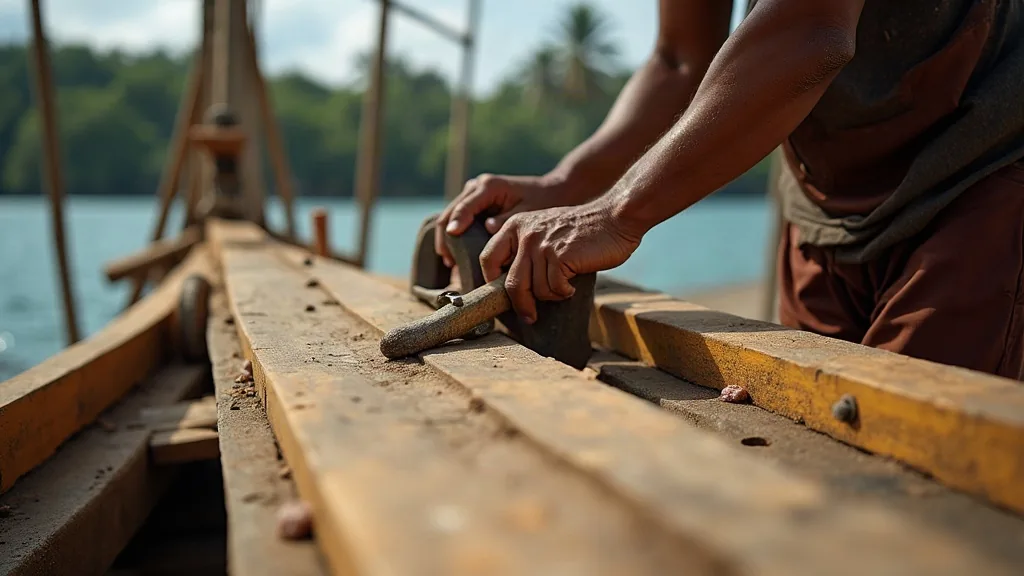
A Lombok wooden boat builder typically uses ulin for keel and backbone, bengkirai for frames and structure, and teak for decks and house, with other tropical hardwoods as required. Proper seasoning, tight joinery, through-bolted fastenings and disciplined caulking give a practical service life of about 15–30 years in tropical waters, provided the owner accepts regular haul-outs, painting and underwater timber maintenance.
How We Approach Wooden Boat Construction in Lombok
As a specialist lombok wooden boat builder, we work from a naval architect’s lines plan or from a proven traditional hull form adapted for Kemenhub requirements. PT Komodo Galangan Nusantara issues construction contracts, and all work is organised around the realities of tropical humidity, monsoon scheduling and local timber supply.
Every timber hull starts with three linked decisions: intended route, passenger or cargo capacity, and target lifespan before major refit. From there we match scantlings, timber species and fastenings so the hull structure, machinery and regulatory paperwork form a coherent whole.
If you are still comparing timber to other hull types, the broader material implications are outlined in our overview of hull materials for commercial and private vessels.
Principal Timbers: Ulin, Bengkirai and Teak
The core of any kapal kayu Lombok build is timber selection and how it is handled. We focus on species that are locally known, structurally proven and reasonably available through licensed suppliers.
Ulin (Borneo Ironwood) – Keel and Backbone
Ulin is extremely dense, oily and rot-resistant. In Lombok and neighbouring regions it is commonly used for:
- Keel and false keel
- Stem and sternpost assemblies
- Keelson and key floor timbers
We use ulin where impact, abrasion and long-term immersion are expected. Its weight contributes to a deep, stable feel, which is valuable on passenger and dive vessels working around Gili Trawangan, Gili Meno, Gili Air and the Lombok–Labuan Bajo route.
Bengkirai – Frames and Primary Structure
Bengkirai is a strong structural hardwood used widely in Indonesian marine work. On a traditional boat builder Lombok project it is typically used for:
- Laminated or sawn frames and web frames
- Longitudinals, stringers and deck beams
- Bulkhead perimeters and structural carlins
Bengkirai takes fastenings well and, when properly seasoned and protected, holds shape reliably. It does move with moisture, so our framing and planking schedule allows for that behaviour without opening critical seams.
Teak – Decks, House and Joinery
Teak is valued for stability under sun and spray, workability and its grip when wet. We commonly specify teak for:
- Weather decks and cap rails
- Cabin sides, wheelhouse and exterior seating
- High-wear trim, steps and handrails
Teak is expensive relative to other timbers, so a galangan kapal kayu Lombok build often blends teak with alternative hardwoods below deck where visible appearance is less important.
Seasoning, Moisture Control and Storage
In West Nusa Tenggara the challenge is not sourcing hardwood; it is managing moisture from delivery to launch. Poor seasoning creates internal stresses and shortens hull life.
- Initial selection: We favour timber that has already been air-dried to a reasonable level, checking for surface checking, fungus and insect damage.
- Air-drying and stacking: Timber is stacked under cover on level bearers with airflow on all sides. Stickers keep layers apart and we avoid direct sun to reduce case-hardening.
- Moisture content targets: Exact numbers depend on species, but for structural members we aim for a stable range suitable for a hull that will live in a warm, humid, salt environment, not an indoor furniture standard.
- Pre-assembly conditioning: Critical pieces (keel, frames, planking stock) are brought into the build area in advance so they adjust before final shaping and fastening.
Rushing this stage to save weeks at the start usually costs years of service life at the end. A serious wooden boat builder Lombok project allows for this in both program and budget.
Framing, Planking and Fastenings
The hull structure combines traditional methods with modern fastenings and sealants where these genuinely improve longevity.
Framing System
- Keel and backbone: Ulin keel blocked and aligned on a strong, level base; stem and sternpost scarfed and through-fastened.
- Frames: Sawn or laminated bengkirai frames erected to the moulds or ribbands, tied to keel and keelson with floors and gussets.
- Longitudinals: Stringers, shelf, clamp and deck beams locked to frames to create torsional and longitudinal stiffness.
Planking Schedule
Depending on vessel size and intended service, we may use single or double-diagonal planking, typically with hardwood outer planks and an inner layer oriented for stiffness and stability. Planking stock is spiled, steamed or carefully edge-set where needed, then fastened to frames with allowance for movement and swelling.
Fastenings and Metalwork
- Fasteners: Marine-grade bolts and screws (commonly stainless or silicon bronze, subject to galvanic considerations with any metal sheathing or fittings).
- Drilling and bedding: Oversized pilot holes where appropriate, bedding compounds in critical locations, and careful torqueing to avoid crushing the timber.
- Straps and brackets: Engine beds, mast partners and key structural joints use plated or stainless steel brackets engineered to avoid crevice corrosion.
Caulking, Coatings and Bilge Protection
Seam tightness and bilge condition determine whether a timber hull stays sound or becomes a maintenance problem.
- Seam preparation: Plank seams are cleaned, bevelled and set to a consistent caulking gap. Tight-butted seams with no room for caulking are avoided.
- Caulking materials: Traditional fibre (such as cotton or equivalent) driven with caulking irons, followed by appropriate seam compounds. On some builds we combine traditional seams with flexible modern sealants in topside joints.
- Exterior coatings: Anti-fouling below waterline, with primer systems compatible with tropical immersion. Above waterline, a paint or clear system that can be maintained without fully stripping every cycle.
- Bilge protection: Bilge areas are cleaned, dried and sealed with protective coatings. Limber holes are kept open and accessible for inspection and pumping.
Regular monitoring of seam movement, fastener heads and bilge moisture is part of the owner’s ongoing responsibility once the vessel leaves the yard.
Lifespan and Maintenance in Tropical Waters
Tropical service is demanding. Warm salt water, high UV and heavy loading all work against timber. A realistic view of lifespan is essential before signing a new-build contract with any lombok wooden boat builder.
| Aspect | Timber Hull (Ulin/Bengkirai/Teak) | Typical GRP Hull | Comments |
|---|---|---|---|
| Indicative major-structure lifespan in tropical service (years) | 15–30, with disciplined care | 20–35, if osmosis and impact damage are controlled | Both ranges are planning bands; specific design and usage are decisive. |
| Haul-out frequency | Often annually | Typically every 1–2 years | Timber owners tend to haul more often for seams, fastenings and underwater timber checks. |
| Underwater maintenance tasks | Inspect/renew caulking, check fasteners, address any soft spots promptly | Inspect for osmosis, repair gelcoat/laminate damage | Timber issues show as local softness or weeping; GRP issues as blisters or cracks. |
| Interior climate sensitivity | High – ventilation and leak control are critical | Moderate – condensation and fittings still need care | Timber frames and linings will not tolerate long-term trapped moisture. |
| Refit style | Cut-out and renew affected structure; rework seams and coatings | Grind and re-laminate; fair and recoat | Both can be extensive; timber refit is more carpentry-heavy. |
If you are considering a kapal kayu Lombok for commercial passenger work, factor in downtime for regular haul-outs and survey. Kemenhub and Syahbandar inspections will expect hull, machinery and safety equipment to be in line with your Gross Akte, Surat Ukur and operational permits.
Programme, Cost Bands and Contract Structure
For a new timber build, total programme from contract signature to sea trials will depend on size, complexity, timber availability and monsoon season. A straightforward 15–25 m vessel may sit in a band of roughly 10–18 months from effective start, while more complex yachts or liveaboards can extend well beyond that.
Construction, repair, refit and vessel-sale contracts are issued by PT Komodo Galangan Nusantara. We typically structure payments around milestones such as keel laying, hull and deck completion, machinery installation and pre-delivery trials, with clear owner-supplied and yard-supplied equipment lists. For indicative build budgets and how we quote, refer to the outline on pricing and quotation for new builds and refits.
Boat-management for an operating timber vessel falls under PT Komodo Vessel Management, while brokerage, central agency and charter marketing are handled by PT Komodo Bahari Nusantara should you later decide to sell or commercially operate the vessel.
Weather and logistics around Bangsal, Teluk Nara, Senggigi and Lembar influence launch timing and early trials. We plan heavy lifts, docking and early voyages with monsoon windows in mind to reduce risk and avoid unnecessary stress on a new timber hull.
A detailed build schedule, including timber procurement, framing, planking, systems installation and commissioning, is normally aligned with the approach described in our indicative build process and timeline notes.
What to Send the Build Desk for a Scoped Reply
To receive a scoped response from the Lombok Boat Builder Build Desk, send the following by WhatsApp (+6281139414563) or email (bd@juaraholding.com):
- Intended use (private, charter, dive, cargo, day-trip, liveaboard) and main operating area
- Target LOA, beam, draft and passenger/berth capacities
- Any existing drawings or example vessels you wish to reference
- Preferred hull material (confirm if you want a full timber build) and engine type/power band
- Desired service life before major refit and acceptable annual haul-out window
- Indicative budget band in USD and any schedule constraints linked to your operation
The more specific you can be at this stage, the more precise we can be in outlining suitable timber species, hull form, build sequence and likely cost and time bands for your Lombok wood construction project.
Frequently Asked Questions
How long does a wooden hull last in tropical water?
Decades, when the structure is ulin and the owner keeps the maintenance discipline: an annual haul-out, recaulking as needed, preservative schedules and prompt attention to any fresh-water ingress. The desk states this upkeep reality upfront in the specification rather than discovering it with the owner in year three.
Is legally sourced ulin still available for boat building?
Yes, through SVLK-documented supply chains. The desk requires the timber legality papers in the contract file for every hardwood structural member — keel, frames, stem — so the boat’s material provenance is documented from the first purchase, which matters for insurance, resale and simple honesty.
Should I choose wooden or fibreglass for my use case?
Decision rule by mission: timber wins on first cost at working sizes, repairability anywhere on the island, and character; FRP wins on annual upkeep and lifetime cost for hard-worked hulls. The full comparison across timber, FRP, aluminium and steel is on the hull materials page, and working-boat specifics on the fishing boat programme.
Can Lombok yards build phinisi-style vessels?
Lombok’s builders handle small-to-mid wooden hulls superbly; large traditional liveaboard commissions in the phinisi class are routed through the group’s construction practice to the specialist yards that build them, under the same contract entity and supervision discipline. The desk tells owners which side of that line their project sits on at the brief stage.
Related reading: what a wooden hull costs to keep in tropical water — the maintenance load owners should budget from day one.